

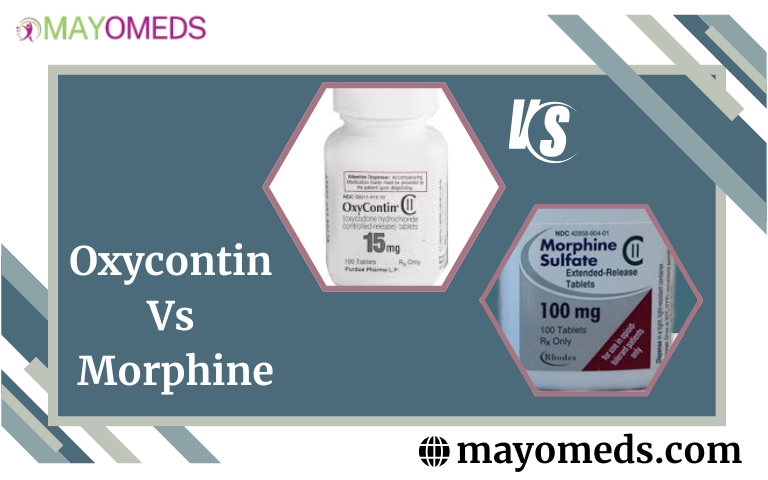
Nowadays, millions of people experience physical pain in one form or another at some point, which stands as one of the most common health problems in their lives. Managing moderate to severe pain, OxyContin and Morphine are prescribed as stronger opioid painkillers for their narcotic and opioid nature. Both drugs are known as pain-alleviating medications, but they are compared in terms of side effects and strengths. In this article, we will mention important information that you need to know about OxyContin vs Morphine sulfate based on their functions, dosages, uses, and side effects. Through this article, you will determine which one might be better for you in a particular situation.
Difference Between OxyContin and Morphine
Both drugs, OxyContin and Morphine, work by interfering with opioid receptors in the brain and the spinal cord, and the receptors are primarily involved with feeling pain and pleasure. Opioids help by blocking the perception of pain and can make people feel happy and relaxed.
What is OxyContin?
OxyContin is an opioid analgesic that belongs to a brand-name extended-release form of Oxycodone hydrochloride and is a Schedule II controlled substance, which is used to manage acute body pain and muscle spasms. This drug is also recommended to treat moderate to severe pain caused by neuralgia, joint pain, and growth disorders. It controls how the body reacts to pain. It is important to remember that before using this medicine, you should remain close supervision of a medical professional.
Uses Of OxyContin
OxyContin is used to relieve moderate to severe pain, acute pain like injury, dental procedure, or surgery pain, and chronic pain such as back pain, nerve pain, or arthritis. It is also frequently recommended to manage the pain of cancer patients and helps in managing pain after major surgeries.
What is Morphine?
Morphine is a very strong painkiller that belongs to the class of medication called opioid analgesics. It is used to treat chronic pain, around-the-clock, long-term opioid treatment, and when other pain medicines have failed. This medication is originally derived from the poppy plant and works in the brain to change how the body responds to pain. Always take this drug under the observation of a medical professional.
Uses Of Morphine
Morphine provides significant relief to patients who are suffering from Fractures, burns, or major soft tissue injuries. Doctors also recommended this powerful drug after a major surgery (like orthopedic and abdominal), for the treatment of chest pain and anxiety.
According to the generic name, OxyContin belongs to extended-release Oxycodone hydrochloride, and Morphine belongs to Morphine sulfate.
OxyContin is a semi-synthetic opioid drug which is derived from thebaine, commonly prescribed for chronic pain, cancer pain and post-surgical pain, while Morphine is a natural opioid derived from the opium poppy, sometimes used for chronic pain relief when other painkillers fail.
Both Morphine and OxyContin are pain relievers, but OxyContin is more potent than Morphine and works within 30-60 minutes, lasts up to 12 hours, while Morphine works within 30-60 minutes, but lasts up to 8-12 hours..
What are the Similarities Between OxyContin and Morphine?
OxyContin and Morphine are both strong opioids, and that changes the user’s perception of pain. Some common similarities include:
Both OxyContin & Morphine are Schedule II drugs, and available in immediate-release and extended-release forms, and prescribed for moderate to severe pain, continuous pain control, chronic pain, and cancer-related pain.
They are both powerful and long-acting opioids available in oral tablets or capsules, oral solutions, and intravenous forms, and share a common side effect: nausea, drowsiness, dry mouth, and respiratory depression.
The mechanisms of both drugs are the same, as they act on mu-opioid receptors and help to block the pain signal in the brain.
Dosage Information (OxyContin Vs Morphine)
Before using this medication, it is important to know which dose will be more effective for you. The actual dose is determined by medical professionals according to the severity of pain, and the dosage will be increased or decreased by them.
Form | Oxycontin | Morphine |
|---|---|---|
Immediate-Release Form | OxyContin OC 5 mg, OC 10 mg, OP 15 mg, OC 20 mg, OC 30 mg | Morphine 15 mg, 30 mg |
Extended-Release Form | OxyContin OP 10 mg, OP 15 mg, OP 20 mg, OP 30 mg, OC 40 mg, OC 60 mg, OP 80 mg | Morphine 15 mg, 30 mg, 60 mg, 100 mg, 200 mg |
Side Effects of OxyContin and Morphine Medications
Although OxyContin and Morphine both work better to treat pain relief, they also carry some potential side effects. When you notice the following symptoms and want to reduce the chances of effects, always consult the doctor for proper guidance. The symptoms include:
Some Common Side Effects of Both Drugs:
- Drowsiness
- Dizziness
- Headache
- Confusion
- Sedation
- Sweating
- Low blood pressure
- Anxiety
- Nausea
Some Serious Side Effects of Both Drugs:
- Respiratory depression
- Seizure
- Severe hypotension
How Long Do Both Medications Last In Your Body?
Both medications (OxyContin & Morphine) show some side effects as discussed above, but these side effects also matter for how long these medications last in your body. It can be detected in various drug tests, including urine, blood, saliva, and hair tests. Detection time varies for individuals based on their age, weight, dose, metabolism, and absorption power of the body. We provide detailed information in the table below on how long both medications last in your body.
Test Type | Detection Time In OxyContin | Detection Time of Morphine |
|---|---|---|
Urine Test | 2-4 Days | 2-3 Days |
Blood Test | 24 Hours | 12-24 Hours |
Saliva Test | 1-4 Days | 1-4 Days |
Hair Test | 90 Days | 90 Days |
After observing these data, it is concluded that OxyContin stays longer than Morphine. Hence, it is more potent and should be taken carefully under the close supervision of a medical professional.
Which is Stronger, OxyContin or Morphine?
For the treatment of moderate to severe pain, including cancer-related pain, the first-line opioid analgesics are OxyContin and Morphine. OxyContin works better to manage chronic pain regularly and is superior for long-lasting relief. It has higher oral bioavailability and more consistent pain control than Morphine. As a result, OxyContin is more preferable than Morphine.
Precautions To Take Before Using Morphine & OxyContin
If you are prescribed either Morphine or OxyContin, before taking it, you should follow the advice:
- Keep the medicine out of children’s reach and prevent theft.
- If you are pregnant or breastfeeding, first consult your doctor, whether it is right or wrong for you, then use it.
- Take medication by checking your health condition with a healthcare professional.
- Inform your healthcare provider if you are adequately controlled with other opioid medications..
- Always follow the direction of your doctor.
- Avoid smoking and alcohol while using medicine.
- Don’t drive after taking Morphine and OxyContin.
- Don’t share your dose with others.
Frequently Asked Questions (FAQs)
What happens if OxyContin and Morphine are taken together?
Taking OxyContin & Morphine together should be dangerous and enhance the side effects, including sedation, drowsiness, dizziness, respiratory depression, and nausea.
Are Morphine and OxyContin the same?
Though both Morphine and OxyContin are used to treat pain but they are not the same. They are different from their origin, drug class, working duration, and potency.
Final Thought
Both OxyContin & Morphine are used for treating chronic pain, post-surgical pain, and cancer-related pain. OxyContin provides a long-lasting relief for individuals who are suffering from prolonged pain. These drugs have risks, but when it is used under a doctor’s supervision, they enhance quality of life.